MENU TO FIDDLE STYLES:
Bluegrass fiddle
Bluegrass fiddle is one of the most exciting and challenging of styles that the fiddle player can attempt, requiring considerable technique and dedication. It is widely considered to have been the Creation of One Man- whether or not it took seven days is open to theological question! Bill Monroe (1911-96), a Kentucky mandolin player, took old-time Appalachian tunes and songs as his bedrock, added a touch of blues and gospel, and constructed a radical new sound quite different from anything heard before.
Bill Monroe
THE ORIGINS OF BLUEGRASS FIDDLE
The Southern Appalachian Mountains, mostly in the States of Virginia, West Virginia, North Carolina, Kentucky and Tennessee, were, in the early years of the 20th Century, the Land that Time Forgot. Settlers from the British Isles, mostly protestant “Scots Irish”, had begun arriving in the mid 18th C, had pushed up through the Cumberland Gap into the hills, cleared their patches of ground to build farms, and stayed put. The Civil War came and went, the Yankees up north industrialised and got rich, while the folk up in the mountains kept themselves to themselves, and stayed poor.
What kind of music was around in the depression years in the South? Old time fiddle music was still going strong Whether in the kitchen, the farm or the schoolhouse, local fiddlers would play for dancing and for their own enjoyment. String bands were very popular, with the fiddle often joined by guitar, mandolin and banjo. The music was songs, both ancient and modern, and instrumentals- dance tunes inherited from the early settlers, modified or newly written. Competitive Fiddlers Conventions abounded and the standard of playing at the top levels was high.
Even since before emancipation, black musicians had a strong influence in the South.
They had brought the banjo- originally known as the “banjer”- over from Africa, and its bright, plinky sound and hot rhythm found a natural home in the hands of white string band musicians. The guitar was the primary instrument for the Blues, a musical form which grew out of a mixture of work songs, field hollers and negro spirituals. Simple in form, the blues, quite apart from the depth of feeling in the songs, had one magic ingredient- a pentatonic scale where the third was neither major nor minor but both at the same time, allowing for every shade of joy and anguish within a single note. Whilst there was little genuine integration between the races, nevertheless black music was certainly there to be heard by the white farming community.In their own way, the people of the Appalachians were deeply religious, mostly followers of fundamentalist Protestantism. This was religion not just confined to the chapel on Sunday, but seen as central to the very way of life of the people. Hymns would have been sung in the fields as readily as the latest Country hits, and the rich harmonies of gospel choirs came naturally. Many children attended singing schools during the school holidays, sponsored by the church or bible companies, at which they would be taught hymn singing, and to read “shape notes”.
As part of the “New Deal”, to restart the economy during the depression, electricity was being brought to many more homes, and by the 30’s even up in the mountains most people would have access to a phonogram or at least a battery radio. Quite apart from the music being made all around them, people could hear professional singers and musicians, hillbilly singers like The Carter Family and Jimmy Rogers, performing for live broadcasts at local or regional radio stations. They could also buy could buy 78-rpm records, whether it was blues (“race records”), country or spiritual music.
This, then, was the musical backdrop in the early life of Bill Monroe. He was born in 1911 on the family farm in Rosine, Kentucky; not in the Appalachians as such, but very much in a rural environment. Typically, his was a large family (he was the youngest of 8) in which siblings had to fight for everything, whether it was motherly love or a new pair of shoes. Born with a “crossed” eye, Bill had poor eyesight and was an easy butt for jokes among his brothers and other kids in the area. He grew up shy and something of a loner, and when his mother died when he was only 10, he was left with a feeling of loss which perhaps never really left him. Music had been a part of family life; when Bill was old enough to pick up an instrument, the fiddle and guitar had already been claimed by his older brothers, so he had to make do with a “potato bug” mandolin (named because of its round shape and contrasting stripes) which he found lying around the house. Despite his shyness, he was a strong and determined boy, and he practiced hard on his instrument, despite the fact that he would much have preferred to play the fiddle. He had an uncle, his mother’s brother Pendleton, who was a fine old-time fiddle player, and Bill liked nothing more than to listen to Uncle Pen’s hoedowns. Soon Bill was good enough to accompany his uncle at local dances, and shortly after his mother’s death he went to live with Pen. The two got on well together, and the fiddle music they shared was to become a key plank of Bill’s musical development. Another important influence was a local black coalminer called Arnold Shultz. He was a fine guitarist- indeed, although he was never recorded, people who heard him layer said that he was a phenomenal player. Bill also attended singing school- he enjoyed the singing and developed a fine voice, but, perhaps due in part to his poor eyesight, he could not get on with the reading of shape notes, and learned purely by ear. After the death of his mother, he would often go out into the fields on his own and sing hymns in his high, powerful voice. The “high lonesome sound” which was to become his trademark, surely had its genesis in these lonely recitals.
THE FORMATION OF THE BLUEGRASS BOYS
Eventually, like many children from the South, Bill and his brothers left the impoverished and overcrowded family farm and headed for the town to seek work. For many it was mills or factories; for Bill and his two brothers Charlie and Birch it was an oil refinery in East Chicago. Among their workmates were thousands of displaced rural southerners like themselves, all homesick and probably somewhat alienated by their surroundings. Anyone who could play and sing country songs which reminded them of home had a ready audience, and the three Monroe brothers, on fiddle, guitar and mandolin, soon found themselves in demand playing for parties and dances. Sooner or later they were going to get “discovered”, but as fate would have it, it was as square dancers that they got their first break. They were spotted at a local dance by Tom Owen, who lead a dance team, and invited to appear on a “National Barn Dance” show, on Chicago’s WLS radio. Tempted by the glamour, not to mention the easy money (the not inconsiderable sum of $22 a week) they took up this offer, and eventually were able to quit their jobs at the refinery. Once in the showbiz world, it was a short step to getting noticed as a musical group, and soon the Monroe Brothers, Bill and Charlie (Birch had by now returned to the refinery) were performing on radio KFNF in Shenandoah, Iowa. Regular exposure on this and various other radio shows gave the band valuable publicity, and they were a good draw at shows over a wide area. These radio shows paid little or often nothing to their acts, and the shows may only be 15 minutes a day, but they were the key to success for any country act. The influence of each station depended largely on the power of its transmitter; a 5000 Watt station might only be heard in a small area, whilst 50,000 might give coverage over many States. What they were playing was by no means bluegrass, and they were just one of a host of brother acts in the country business, but they were still a striking couple nonetheless. Bill Monroe had already developed a speed and attack to his mandolin which had not been seen before- it was normally seen as a “parlour instrument”, to be plucked daintily and usually lost among the more strident fiddle and guitar. In the hands of Bill it was another beast entirely. Their singing was unusual too, high and strident, with well developed harmonies. Bill was tall, handsome and dignified, his brother Charlie affable and a natural entertainer. They eventually teamed up with another singer, Byron Parker, a good businessman and frontman. Together they worked throughout Georgia and the Carolinas, selling out shows wherever they played. In 1936 a telegram arrived from Eli Oberstein at Victor Records; “WE MUST HAVE THE MONROE BROTHERS ON RECORD STOP WE WON’T TAKE NO FOR AN ANSWER STOP ANSWER REQUESTED”. By 1938 they had laid down sixty songs for Victor on the Bluebird label; the first of these was their biggest hit, a gospel number “What would you give in exchange for your soul”
By this time Parker had left to front his own band, and despite their success, the inevitable strains of sibling rivalry were never far from the surface; it was rumoured, erroneously, that Bill had knifed his brother in a fight. (Charlie ruefully admits “we were hot-headed and mean as snakes”. Eventually Charlie quit, leaving Bill to fend for himself. Bill Monroe was neither a natural frontman, nor a good businessman. Nevertheless he was extremely determined, and he saw this as an opportunity to form his own band, free at last from the overbearing presence of any other Monroes. The first person he hired was guitarist and singer Cleo Davis, who answered an anonymous ad in the local paper. Nervous and unsure of himself, he was asked at the audition to sing a couple of songs. He chose a couple of Monroe Brothers hits (“What would you Give” and “This World is not my Home”; it was not until his prospective employer joined in that he realised with delight who he was singing for.
Next to join were fiddler Art Wooten from North Carolina, and a local man Tommy Millard, who played jug, spoons and blackface comedy. Although this aspect of the performance was eventually removed from the band, comedy was a routine part of most country acts of the time, providing a welcome contrast to the sad songs and serious religious numbers which made up most of the repertoire. It was with this four-piece band that the name “Bill Monroe and his Blue Grass Boys” was first used, the term bluegrass being a reference to his home State of Kentucky, commonly known as the Blue Grass state.
As a band they rehearsed hard, with Monroe paying particular attention to Art Wooten; from the very start he regarded the fiddle as the key to the sound he wanted to achieve, and he always spent long hours demonstrating with his mandolin what he wanted to hear on the fiddle. The material they were doing at this time was a mixture of old country standards, original songs, old time fiddle breakdowns, and gospel songs. For the latter, they had carefully worked out four-part harmony parts.
THE GRAND OLE OPRY
With Monroe’s contacts and experience, the band were able to continue working for radio stations, and eventually the Bluegrass Boys decided to audition for the Daddy of them all, the Grand Ole Opry. Based in Nashville, this station WSM (sponsored by an insurance company whose motto was We Shield Millions) had started out playing mostly “classy” music- classical and opera. Tempted by the success of the rival National Barn Dance show, they decided to try out Jimmy Thompson, a champion octogenarian fiddler to play some old timey music, despite the fact that the hillbilly image was definitely not one they wished to be associated with. Such was the volume of calls and letters in praise of this move, that WSM yielded to the inevitable, and a live country show was established running every Saturday night, with a regular cast, each of whom would do a short spot as part of a variety show. The show was fronted by George “Judge” Hay, and under his guidance the Opry grew and grew, attracting such talent as the highly popular Roy Acuff; it expanded into the 2200 seater National War Memorial Auditorium, and was still turning people away. The Blue Grass Boys’ audition in October 1939 was a success; in the words of Davis, “We really put on the dog. We started out with “Foggy Mountain Top”, then Bill and I did a duet tune with a duet yodel, fast as white lightening…I think that really sewed it up”. Delighted by what he heard, presenter Hay told them “If you ever leave the Opry, it’ll be because you fired yourself”.
The band were a big hit with audiences. They were used to country and gospel songs, and to string bands playing hoedowns, but here was a band that for the first time successfully combined them. The songs were played fast and exciting with a driving fiddle shuffle, startlingly nimble mandolin solos, pinned down by a steady bass (Tommy Millard had by this time been replaced by bassist and singer Amos Garren).
The music was tight, demanding and innovative. They were the first band to move out of the “safe” keys of C,G and D; to pitch Monroe’s high lead vocal they used B flat, B and E, particularly tough for a hoedown fiddle player.
In 1940 the band made a further series of recordings for Bluebird, including the fiddle tune “Katy Hill”, and the song “Muleskinner Blues”. With a demanding work schedule, and with the onset of the war the risk of the call-up, there was a rapid turnover of musicians in the Bluegrass Boys, a pattern that was to continue throughout Monroe’s career. It was in 1946 that the “classic” line-up finally came together, which for many defined bluegrass from then on.Several fiddlers had already come and gone; in mid ’42 Monroe announced on his show that his latest fiddler, Howdy Forrester, was leaving to join the Navy. Hearing this, the young Florida fiddler Chubby Wise jumped on the train, and was at the Opry the following Saturday, asking for an audition. Despite a strong Western Swing influence, Monroe liked what he heard, and hired him on a trial basis. He brought a new smoothness and richness of tone to the band, used plenty of vibrato and was able to take hot jazzy improvised fiddle breaks. He was altogether a more modern sounding player than many of his predecessors.
Around 1944 Monroe was joined by guitarist and singer Lester Flatt, from Sparta, Tennessee. He was a smooth, fluid guitarist and also a very fine singer with a voice that blended well with Monroe’s; Flatt is credited with many lead vocals, to which Monroe would add a high tenor harmony..
Also in 44, Howard Watts with the stage name Cedric Rainwater, joined as bass player; he added a 4-beats to the bar walking bass line to many of the medium and slower numbers.In 1942, for the first time a fifth musician had been added to the band, a banjo player David Akeman, known as Stringbean; he played clawhammer or frailing style as well as doing comedy, and added an extra “down home” mountain touch to the band sound.
When he left in 1945, he was replaced by another banjo player, 21-year old Earl Scruggs from North Carolina. This was no ordinary banjo player. Flatt, who was not enthusiastic about hiring another banjo, said of the audition that he was; “..dumfounded. I had never heard anybody pick a banjo like he did. He could go all over the neck and do things you just couldn’t hardly believe.” Scruggs had perfected a developing North Carolina style of three-finger picking, which allowed him to combine a high speed rolling rhythm with melody, producing one melody note out of every three. He could take breaks just like a fiddle player, and the Opry audience was as astounded as Flatt; Scruggs was an overnight sensation.Here finally was the complete bluegrass sound. Drawing on all the nostalgic elements of rural Appalachia- the hoedown fiddle and banjo, the gospel songs with rich harmonies and the “high lonesome sound”, the country and string band sound from the guitar and mandolin, the strong modal and bluesey element to many of the songs. All this underpinned by a driving bass rhythm, and with soloists who could take breaks like a jazz or Western Swing band. This was indeed a sound both ancient and very modern, and further commercial success was a foregone conclusion. Recordings of “Muleskinner Blues”, and Monroe’s composition “Kentucky Waltz” were best sellers, and the band were touring ever further afield, always to packed houses
The bluegrass fiddlers of Bill Monroe
Monroe always considered the fiddle to be the key instrument of bluegrass; he would have learned it himself had not his brother got to it first. He always spent a lot of time tutoring his fiddle players, showing them on the mandolin what he wanted them to play. In a career of gigging and recording spanning over half a century, there was a host of fiddle players who got the call; some for just a few shows, some for over a decade. The function of the fiddle within the band evolved gradually. At first it was only expected to play fairly old-timey breakdowns. Howdy Forrester introduced the idea of playing variations, and Kenny Baker took the first real improvised breaks. As the years progressed Monroe sometimes added twin and triple fiddles. An ability to do double stops reduced the number of fiddlers required and became de rigeur. Vassar Clements introduced a strong blues influence which has also become an essential part of the bluegrass fiddle arsenal.Here’s a brief roundup of some of some of the more noteable fiddle sidemen. (His Royal Highness Vassar Clements gets a Royal Box of his own!)
ART WOOTEN from North Carolina was the first fiddler hired by Monroe after splitting with his brother Charlie. He was a relatively “Old School” fiddler; Monroe said of him “On the old-time fiddle numbers, he was hard to beat”. He introduced Orange Blossom Special into the band, having learned it from the man who weas to be his successor, Tommy Magness Wooten went on to work with both Flatt and Scruggs and the Stanley Brothers in the late 40’s and 50’s,and produced two solo albums in the 70’s.
TOMMY MAGNESS
A champion hoedown fiddler from Tennessee, Magness was already a veteran by the time he joined the Bluegrass Boys, having worked with Reg Hall and his Blue Ridge Entertainers.. With Reg he made the first ever recording of Orange Blossom Special, beating even its author Ervin T Rouse to the count, though Rouse’s publisher prevented the release. He was hired in 1940; Monroe said of him “He had that fine old-time touch, rich and pure, but he was able to put a touch of blues to it.” Together they recorded Katy Hill, a fast but clean rendition which many regard as the prototype bluegrass fiddle tune (though notably, this recording shows the fiddle tune being played repeatedly with virtually no variation- something that would be unthinkable in later years). After leaving, Magness spent some years working with Country star Roy Acuff.HOWDY FORRESTER
From West Tennessee, he began his professional career with singer Herald Goodman, and played twin fiddles with Georgia Slim. He moved down to Texas, where he encountered the technically advanced contest style of fiddling: “those fellows actually scared the dickens out of me because they were reaching up into the second position and getting notes I’d never seen before…if you’re in somebody’s backyard, you’d better get a hoe just like he’s got.”. He joined The Bluegrass Boys briefly in 1942, introducing some of the ideas he had picked up in Texas. Monroe said of him; “Howdy, now he’s the first man who played with me that played double stop, and Howdy knows that neck all the way, and he knows how to get that tone out, give the fiddle a chance. Forrester was a prolific writer of tunes, many of which have become widely played, including “Memory Waltz”, “Weeping Heart”, and the fiddle contest standard “Wild Fiddler’s Rag”.
CHUBBY WISE
From Lake City, Florida, Wise was with The Bluegrass Boys from 42 to 48, including the “golden years” when Flatt and Scruggs were with the band. Among the classics he recorded with Monroe were “Footprints in the Snow” and “Kentucky Waltz”. After leaving in 48 he had a long and successful career. He wrote the tune “Shenendoah Waltz” which was a hit for Clyde Moody. And appeared on the Western Swing classic, Bob Wills’ “Maiden’s Prayer”. In 1956 he recorded “Foggy Mountain Breakdown” with Flatt and Scruggs (even if you’ve never heard of bluegrass, you still know the foggy mountain breakdown!) He worked for many years with the “Singing Ranger” Hank Snow, and appeared on the best selling live Merle Haggard album “The fightin’ side of me” .Throughout his life the Orange Blossom Special was his trademark piece, which he claimed he had co-written.BENNY MARTIN
Nicknamed “The Big Tiger” by his friend Hank Williams, because of his size and ebullient personality, Martin joined Monroe in 1948, one of the first fiddlers to use sliding double stops. He went on to work with Flatt and Scruggs. He remained popular due to his fine singing and extravagant showmanship; he had a trick double fiddle which he could flip on its back and still carry on playing. His “country stomping “act was a successful opener for Elvis Presley at many shows in the 50’s.KENNY BAKER
A sometime coal miner from east Kentucky, Baker was described by Bill Monroe as “the best fiddler in bluegrass”. He was in the band, on and off, between 1957 and 69, a longer tenure than any other player. He recorded classic fiddle tunes such as Jerusalem Ridge, Devil’s Dream and Salt Creek. He was the son of an old time fiddler, but grew up listening to Bob Wills, Stephane Grappelli and Glen Miller. He had a sweet, full tone with a strong jazz influence. In 1969 he released an album “portrait of a bluegrass fiddler” on County records. It was one of the first fiddle-led bluegrass albums, and proved highly influential in demonstrating “how it should be done”. Bill Monroe had always dreamed of doing an album of the fiddle tunes he had learned from his uncle Pen, but always felt he had to wait until the right fiddler came along; that man was Kenny Baker and the album “Bill Monroe’s Uncle Pen” was released in 1972.RICHARD GREENE
The first of Monroe’s “city fiddlers”, Greene started out with a full classical training, moved into old time, and then on seeing Scotty Stoneman in LA, was turned on to bluegrass. He joined Monroe in 66 at a time when his career was once more in the ascendant. In 67 Greene moved on to form a pioneering bluegrass-country-rock (this was the Year of the Hyphen!) band Seatrain, in which he played electric violin. He played on some of the early newgrass albums with David “Dawg” Grisman, formed the Greene String Quartet and has done a mountain of session work. One of his most extravagant projects has been “What if Mozart had played with Bill Monroe; a concerto for violin and orchestra”. I’m not sure how you follow that.BOBBY HICKS
From the “banjo State” of North Carolina, Hicks was with Bill Monroe from 1954-57. He was in the first of the ‘triple fiddle” line-ups, though when Monroe realised that Hicks could play perfect double stops, one of the other fiddlers was out on his ear!
He returned to the band in the 80’s, playing on the Grammy award-winning album “Southern Flavour”. In 2002 he was among the all-star cast of the post-“Brother Where art Thou” tour, “Down from The Mountain”BYRON BERLINE
Brought up in the Texas contest fiddling tradition, Berline was a prodigy, entering his first contest at the age of five, and winning from the age of 10. He was greatly influenced by Benny Thomasson, pioneer and master of the contest style. He was turned on to bluegrass at university in Oklahoma, joining a local band called the Cleveland County Ramblers. In 1963 The Dillards played at his college, and he got to jamming with them afterwards. The band did not have a fiddler, and were knocked out by his playing; he was invited to LA the following year to record an album with them- a groundbreaking fusion of his Texas fiddling with their bluegrass backing.
Around the same time he both won Weiser (the nation’s top fiddle contest) and appeared at the Newport Folk Festival. In ’67 he joined the Bluegrass Boys, bringing with him his full armoury of intricate double stops, triplets, third position fingering, jazzy phrasing, faultless tone and intonation. He was with the band only a short time, but was able to record two classics; “Sally Goodin” and “Gold Rush”. He was called up to the army, and on his return found his place filled by Kenny Baker. Undaunted, he set off to LA to become a session man, quickly landing a job with the Rolling Stones (he appeared on the classic “Country Honk”. By 1971 he was playing with country rock outfit the Flying Burrito Brothers; the band were loud and heavy, playing to huge audiences, but introduced a bluegrass segment to the middle of the gig: “we could put Byron Berline on there and have him play the Orange Blossom Special; it’ll sound like they made the touchdown in the last 3 seconds”.
Hey, being a bluegrass fiddler is a dirty job, but someone has to do it!
DECLINE AND REVIVAL OF BLUEGRASS
Through the 1950’s Monroe’s own career, whilst never actually failing, was in decline. Rock and Roll was on an unstoppable rise and popular taste, even in the rural south, was moving away from anything with hillbilly connotations. Elvis Presley, who had been a big fan of the Bluegrass Boys, recorded a version of Monroe’s waltz Blue Moon of Kentucky, but with a fast driving rockabilly beat. Quick to capitalise on this, Monroe re-recorded the song himself, starting out in the original waltz time, but switching midstream to a fast 4 time. His band, however, was overshadowed by Flatt and Scruggs, who were more polished, better managed and easier for promoters to deal with. Monroe had always been a difficult person, distant and aloof even with his own musicians. He was slow to give praise, and often even slower with his paychecks, and he found it difficult to hold on to a regular band.
By the end of the 1950’s bluegrass was well established in the south; quite apart from those musicians who had learned the style from his records and gigs, Monroe had trained a small army of fiddlers, guitarists and banjo players as they passed through his band. The end of the decade saw the start of the “folk revival” among students and intelligencia in New York and the Northern cities. Every musical revolution has its backlash, and many people were turning against the commercial and artificial values of slick Nashville country music and brash rock and roll. The revivalist movement had its roots in the communist-leaning protest songs and union songs of the 1930’s, centered around the singer Woodie Guthrie. Key figures on the intellectual side were the folksong collectors John Lomax and his son Alan, who both worked for the Archive of American Folk Song at the Library of Congress. Another father and son team was Charles Seeger, a Washington ethnomusicologist, and his son Pete, a revivalist banjo player and folksinger. It’s difficult to believe today, but to curious, music-loving urbanites like the Lomaxes and the Seegers, Old time music and bluegrass seemed exotic, distant and semi-legendary. Mike Seeger, half-brother of Pete, was also learning banjo. In 1952 he was among the first to be exposed to bluegrass; saw Flatt and Scruggs playing at a “Country Music Park”,) a type of open-air event that was becoming common and would be the prototype for the Bluegrass festival). He described it as; “Incredible! It was like a religious experience”. Folk song collectors were already becoming familiar with the old time fiddle and banjo playing of the Appalachians, but bluegrass, if they were aware of it at all, was seen as something modern and commercial. It took some time before they realised that this was a not only a direct descendant of traditional old time, gospel and blues music, but one which was no fossil, but was alive and kicking, with a genetically modified Super Strain of instrumentalists, particularly on the banjo. Before long Mike Seeger had brought Scruggs style picking to New York, where it was greedily devoured by an eager pack of “citybillys” (a term coined by Charles Seeger)
By the end of the decade there was both a ready audience and a new breed of urban musicians eagerly sampling the delights of bluegrass.
Among the first new bands to form outside the rural heartland of bluegrass was the Country Gentlemen, formed in Washington DC in 1957, led by singer-guitarist Charlie Waller. They quickly picked up radio play and a recording deal with Starday Records. It was to be a successful and long-running project, with a host of musicians serving time in the band, including fiddler Ricky Scaggs and dobro maestro Jerry Douglas.
A new milestone came in 1959 when Alan Lomax returned to the States after eight years exile during the McCarthy witchhunts. He had a theory that the new folk revival should be studying, valuing and celebrating not just at the material being performed, but also the cultural context of the performance. In his eyes rock and roll was as valuable as blues, and bluegrass just as valid a folk art as old-time mountain music. He put on a concert of blues, rock and roll, old time, gospel and bluegrass at Carnegie Hall, telling his largely educated and middle class audience “The time has come for Americans not to be ashamed of what we go for, musically, from primitive ballads to rock‘n’roll songs”. Among those performing were Mike and Pete Seeger, and the Baltimore-based bluegrass band Earl Taylor and the Stoney Mountain Boys. Monroe had declined an invitation because of Lomax’s political leanings. He would have been a sensation; even the admittedly minor league Earl Taylor had the audience “rarin’and screamin’and hair pullin”.
Folk festivals were beginning to get established, led by that at Newport, Rhode Island.
In the same year as the Carnegie concert, the Newport Festival featured the Stanley Brothers and Earl Scruggs. 1960 saw the first college bluegrass concert, at Antioch, Ohio, the start of what was soon to be an extensive touring circuit, both for revivalist and southern bluegrass bands. The traffic started to go both ways; 1960 was also the year when Ralph Rinzler (a prominent New Jersey folklorist and mandolin player who “discovered” Bill Monroe and guitarist Doc Watson) went south with his group the Greenbriar Boys. They entered the band contest at Old Fiddlers Convention at Union Grove, North Carolina, and came out with first prize. This really was a turning point; from here on it was no longer the case that educated college kids would be trotting out a pale copy of the real thing- soon many of them would be the Real Thing.
By 1966 Bill Monroe, who had been slow to take part in the “opening up” of bluegrass, had a band made up largely of energetic young northerners, including the singer Peter Rowan, and the classically trained fiddler Richard Greene. He had already hired Bill Keith, the new yankee wunderkind of the banjo, who had discovered a way of playing fiddle tunes and breaks note for note. This was sweet revenge for Monroe, for he whisked out the young prodigy from under the nose of Earl Scruggs, with whom he still had a long-running feud.With this influx of new blood, the remainder of the 60’s and 70’s saw many changes in bluegrass. The seemingly unbreakable walls between country and rock, bluegrass and jazz, acoustic and electric, were crumbling. The Byrds, the Nitty Gritty Dirtband and the Flying Burrito Brothers were taking country-rock to large audiences, combining acoustic and electric instruments. Developments in pickup and amplification technology meant that it was now possible for fiddle, mandolin or banjo players to stand in front of a drumkit in front of thousands of baying fans, shake out the nits from their shoulder-length hair, and rock out with the best of them. Grateful Dead rock god Jerry Garcia went the other way; he could do a fine turn on the bluegrass banjo, and teamed up with ex-Monroe sidemen Peter Rowan, mandolinist David Grisman and fiddler Vassar Clements to form “Old and In the way”. This was long-haired bluegrass at its best. Although short lived, the band did a number of live recordings at west-coast gigs in the mid 70’s. To my ears Vassar’s fiddling in this band was as good as it gets, period.
Fiddle technique in bluegrass
The fiddle gets plenty to do in a bluegrass band; it will often lead the melody in an instrumental or "breakdown"and it will share short improvised solos with the other instruments. When not soloing, the fiddle will provide accompaniment with simple shuffles or off-the beat chops, and if backing a song it may put short licks between the vocal phrases. It may also kick off the number with a
little one or two-bar phrase , usually with staccatto bowing, setting the tempo for the band. A similar phrase or "tag" may also wind up the tune.
The keys used may be quite adventurous; Monroe set a dangerous precedent by pitching many songs in E or even in B to suit his singing. Where sharps are concerned, two's company but five's a plague!
Like in old-time fiddling, bluegrass uses a lot of open string drones, but the double stopping tends to be a lot more sophisticated. It is common to change position, perhaps from first to third, whilst holding down a double stop, and position changes are integral to many licks.Bluegrass bowing
Bowing is also quite advanced, using a variety of standard patterns including the Nashville Shuffle and the Georgia Bow. The most exciting is the double shuffle which uses 3-note patterns (borrowed from the 3-finger banjo style) stretched across two bars. When combined with double stops and string crossing this sounds most dramatic and is used to great effect in Back up and Push, and more particularly the Orange Blossom Special. This showpiece tune, where the fiddle imitates an accelerating express train, is aptly described by Stacy Phillips as "crowd manipulation and riot control for the bluegrass fiddle".
Soloing uses a lot of bluesey sounding notes-flattened thirds and sevenths and this, together with the frequent use of higher positions, gives the so-called "high lonesome sound".One of the endearing features of bluegrass is the favoured mode of amplification, which is to use microphones rather than pickups on all the instruments; this means that when someone takes a solo he, (or, shockingly, she!) steps forward to the stand whilst the others step back to achieve the right sound balance. This is a throwback to the Grand Old Opry where many of the early bluegrass bands cut their teeth; at that time it was not easily possible to mix the sound between mics, so they made do with jus the one. In the 70's and 80's, when transducers, high quality PA speakers and mixing desks became widely available, many bands took the plunge and adopted the new technology. To some musicians however, what was good enough for Bill Monroe is good enough for them. When done well, the elegant choreography of working around a single mic looks and sounds great. When done not so well, it's a soundman's nightmare, and if you're stpping forward when you should be stepping back, you stand a good chance of being decked by the headstock of a guitar or banjo!
_____________________________________________________________________________________Hot Licks for Bluegrass Fiddle
Players usually draw on a large store of "hot licks"-flashy riffs which can be pulled out instantaneously when soloing. These will often have been painstakingly copied from records by the great players, but a huge selection is now available frozen and pre-packaged in various excellent bluegrass tutors and manuals.
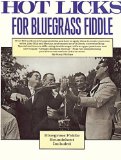
Hot Licks For Bluegrass Fiddle

Of all the fiddle books in my collection (and belive me, there's quite a few), Hot Licks for Bluegrass Fiddle by Stacey Phillips is my favourite. The first reason is that Phillips gets right to the essence of blugrass fiddling, showing how short, often simple phrases can be used in almost any bluegrass song. There are 450 licks, plus a number of complete tunes such as Roll in my Sweet Baby's Arms, Back up and Push, and Bury me beneath the Willow. The book refers closely to the work of specific players such as Vassar Clements, Chubby Wise and Mark O'Connor. It deals with double stops, connecting licks, kickoffs and tags, the High Lonesome Sound, and has a special section on that most exciting of tunes, the Orange Blossom Special. Some books will inform you and help you to some extent. This book can actually do the complete job and turn you into a proper bluegrass player.
The second reason I love this book is the easy, amiable and humorous writing style; I'd better come clean and admit that my own writing style owes more than a little to this book! My favourite quote is this, which closes his section on the Orange Blossom Special:
"The tavern goes wild with applause. Adulation showers on you for a few momets. Then the audience slowly settles back in their seats, the jukebox is turned on, you are left alone. Welcome to the manic-depressive world of bluegrass fiddle."
_____________________________________________________________________________________
Classic Bluegrass songs
Bluegrass shares much of its repertoire with old time music; fiddle tunes such as Soldiers Joy, Bill Cheatem, Cripple Creek , Billy in the Low Ground and Arkansas Traveller lend themselves readily to either style; the roots of many of these are in turn inherited from English, Irish and Scots settlers. Many recent compositions are widely played, such as Jerusalem Ridge and Roxanna Waltz (Bill Monroe), Kissimmee Kid and Lonesome Fiddle Blues (Vassar Clements). The latter tune found itself embedded in Charlie Daniels' hit The Devil went down to Georgia. There are many classic bluegrass songs which work either as instrumental or vocal numbers, such as Roll in my Sweet Baby's Arms, Nine Pound Hammer and Don'tlet your Deal go Down.
Back to the roots
Bluegrass continues to thrive, with many festivals and fiddle contests throughout the USA; recently fiddler Alison Krauss has had great mainstream success, and it has become almost de rigeur for established country superstars to release a "back to the roots" bluegrass album. Since the 1970's bluegrass artists have been expanding the boundaries of the genre, most successfully in the "new acoustic" or "jazzgrass" movement where fiddler like Mark O'Connor, Sam Bush, Darrel Anger and Richard Greene have incorporated new textures and tune structures, jazzier chord sequences and longer, more elaborate solos into their work. First prize for going out on a limb must go to Richard Greene, who has a new has a new and adventurous classical/bluegrass fusion piece called What if Mozart had played with Bill Monroe; a concerto for violin and orchestra !
VASSAR CLEMENTS
It was in the late 70’s when someone played me a copy of Old and in the Way. I had been making my stumbling waY as a jazz and rock fiddle player, and was only vaguely aware of the existence of bluegrass. From the very first notes I heard of Vassar Clements on this album , it was like Moses had come down from the mountain, bearing tablets of stone. Never mind the ten commandments, what I saw carved in stone was THOU SHALT LEARN THESE LICKS! Along with practically every other fiddle player who heard the album, I was in thrall to Vasser from then on, slavishly copying his every phrase. His style, unlike many of this predecessors in bluegrass, was not rooted in old time fiddle music, but in jazz; his playing soared and swooped like a bird of prey, aggressive, startling, effortless. He brought a unique blues element to what he played; not just playing flattened thirds, but flattened fifths and sevenths too, turning the chords inside out with consummate ease. Yet he was no musical intellectual; he did not read a note of music, and understood no theory- all of his bizarre chromatic twists and turns, his outlandish notes from Beyond the Chord were all instinctive, coming straight from the heart rather than from a calculating mind. He could shift position anywhere on the neck of the fiddle without batting an eyelid- indeed, when he played his eyes were closed, his calm square face like a granite-hewn socialist-realist statue; yet he was entirely self taught. This was The Man!
Vassar Clements was born in 1928 in Kinard, South Carolina, but lived most of his life in Kissimmee, Florida. At the age of seven he was teaching himself guitar and fiddle. When Bluegrass Boy Chubby Wise called round at the house one day (he was a friend of a man who was staying at the family home), he invited the young Vassar to jam with him, and a new world opened up ; “I had been listening to those people (the Bluegrass Boys) for years on our old battery-powered radio, and I idolised them. Let me tell you, that was quite an experience for a young man”.
Five years later he was invited to audition for Bill Monroe. Despite the fact that he had been mostly listening to jazz- Tommy Dorsey, Joe Venuti and Stephane Grappelli- Vassar had learned Chubby Wises’s parts note for note, and landed the job, at the age of just 14. His early work in bluegrass was very much in the standard mould, but as his playing and confidence developed he began to push the boundaries and developed a completely unique and highly distinctive style. He was with Monroe on and off until 1956, when he went to work with Jim and Jesse McReynolds. The next decade or so was a grim time, when drink got the better of him, and he found himself surviving on blue collar jobs. In 1967 he was back on form and moved to Nashville where he started getting session work. His big break came in 1972 when he was invited by the Nitty Gritty Dirtband to play on their legendary “Will the Circle be Unbroken” album. This was a symbolic moment in musical history- a joining of the circle between the new generation of commercial/country/rock/hippy musicians, and the “old guard” of revered/legendary/bluegrass/no longer commercial players such as Earl Scruggs, Doc Datson, Mother Maybelle Carter and so on. The album was an instant classic, and Vassar got more than his share of the limelight, with demon versions of his trademark composition “Lonesome Fiddle Blues” and the failsafe crowd-pleaser “Orange Blossom Special”.
From this point on all doors were open, and work poured in, with sessions for the Grateful Dead, Paul McCartney, Linda Ronstadt, BB King, the Monkees, the Allman Brothers-over 1000 albums in all. Arch DeadHead and sometime banjo player Jerry Garcia, together with Peter Rowan, David Grisman, and John Kahn on bass, put together a fun bluegrass band, with Vassar on fiddle. Playing a mixture of traditional bluegrass, rock covers (Wild Horses), and thinly disguised anthems to the drug culture (Panama Red), this was the perfect band for a student audience. The live album released in 1975, Old and In the Way, was the best selling bluegrass album for decades, and secured immortality for Vassar Clements.
From here on he could do no wrong, and to his growing mountain of album credits he added a long string of solo albums, focusing on his own brand of “Hillbilly Jazz”.For many years he played a distinctive, ornate and slightly mysterious instrument given to him by his longtime friend John Hartford. In place of the scroll is a carved, bearded head, and on the back is a beautiful painting of Sappho holding a lute. Around the side are letters which no one has been able to translate. The fiddle may once have belonged to a Russian Prince, and may be the work of Gaspar Duiffoprugcar from the 16th century. If you take a look at the Vassar Clements official website you’ll see the carved head of his fiddle; since his death in 2005, tears drip slowly from the eyes.
Late in the evening, about sundown,
High on the hill, an' above the town,
Uncle Pen played the fiddle, Lord, how it rang,
You could hear it talk, you could hear it sing!(Bill Monroe , Uncle Pen)
Links:
- Vassar Clements
- International Bluegrass Music Association
- Stacyphillips.com
- Bluegrass Unlimited Magazine
- Alison Krauss
- Mark O'Connor
- Richard Greene
- bluegrass fiddle for beginners
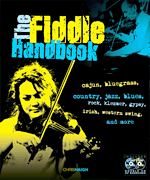
Chris Haigh is a fiddle player based in London; he has a large repertoire of bluegrass, old time and Western Swing fiddle tunes, and performs either solo, with a singer/guitarist, with a larger country rock band, or with the barn-dance band QUICKSILVER. He has worked with Leon Hunt's Southern Exposure and The Daily Planet, The Coal Porters, Orange Blossom Sound and the Charlie Boston band. He gives lessons and workshops on jazz and bluegrass fiddle, and has published several fiddle books , including The Fiddle Handbook The Fiddle Handbo.
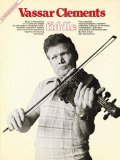

Vassar Clements - Fiddle: Bluegrass Masters Series
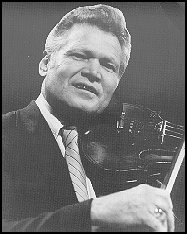
You'll hear echoes of Vassar's playing in almost every contemporary bluegrass fiddler; he was the master of the startling, off- the wall lick, and of the "high lonesome sound"- superimposing minor blues phrases over major chords. This book has transcriptions of many of his finest solos, including Pig in a Pen, Salt Creek, Kissimee Kid, and Corrina Corrina. There are 17 in all, including his composition Lonesome Fiddle Blues, which found its way into Charlie Daniels' song The Devil Went down to Georgia.
You will need care and patience to work your way through some pretty complex double stopping, but every lick, once mastered, is money in the bank, and will last you a lifetime.

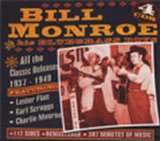
Bill Monroe: All the Classic Releases 1937-1949
This 4 cd set traces the evolution of bluegrass from Monroe's first recordings in 1936 (as the Monroe Brothers), through to 1940 with fiddler Tommy Magness, 1945 with Chubby Wise, and 1946-7 when Flatt and Scruggs joined, finally crystallising the classic blugrass sound. Each CD has listings of who plays what, and a page of biography. With a total of 112 songs, this collection is amazing value, and contains all the classic numbers which are essential to any bluegrass repertoire; Nine Pound Hammer, Will the Circle be Unbroken, Roll in my Sweet Baby's Arms, Roll on Buddy, Mule Skinner Blues, Orange Blossom Special, and Blue Moon of Kentucky, to name but a few.
Bluegrass is a genre which for most of its pratitioners is extremely tradition-bound, so it is essential to have the original recordings to refer to, to understand the sound, the repertoire the arrangements and the style. There's no better source material than this.

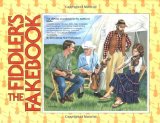
This collection is described as "the ultimate sourcebook for the traditional fiddler". Certainly if you're interested in bluegrass and old timey fiddling this is the book for you, though there is also a fair selection of Irish, Scottish, Shetland and French Canadian tunes.
The spiral binding makes it easy and practical to use, as does the relatively large music font. Unlike a book like O'Neills, there are chord symbols, and the author David Brody has taken the trouble to give you the key; since many of these tunes are modal (eg A Dorian, E Aeolian), this is very helpful. Also valuable is that each tune is listed by genre (old-time, Irish etc), by type (reel, hornpipe), and by tuning where appropriate (eg AEAE). For every tune there is also a list of recordings, and the alphabetic arrangement makes it easy to find a tune if you know what you're looking for. There is a short section at the beginning introducing and explaining these different classifications.
Many of the tunes are well known standards, but there also some rarer gems, such as one or two David Grisman "Dawg" tunes and some excellent contest-style numbers.