MENU TO FIDDLE STYLES:
Cajun Fiddle
In England we’re not very good at languages, and the average Brit has only to set foot in France to realise that “Parlais-vous Anglais?” does not cut the mustard. However, in the late 80’s I was one of a considerable stampede of musicians who suddenly found themselves getting to grips with such useful phrases as “laissez les bon temps roulez!”, “hey la bas!”, and the ever-popular “ayy-iii!”. Two-step dancing was all the rage, diatonic accordions were flying off the shelves, supermarkets were being scoured for something called “file gumbo”, and no folk festival was complete without a band with a French title, even if all the members were from Basingstoke.
Cajun fever had arrived.
This of course is not without some irony, since it was the British, assuming the mantle of the Evil Empire, who were responsible for a shameful piece of Ethnic Cleansing, removing all the French speakers from their new homeland of Acadie. They had sailed from western France to what are now the Canadian provinces of Nova Scotia and New Brunswick, in the 17thC. They named the area Acadie, after the Ancient Greeks’ idea of a rural idyll, Arcadia. The term Cajun derives from Arcadian (and one of Britain’s first revival cajun bands was called R.Cajun. Clever, eh!)
Britain and France seemed to be almost endlessly at war at this time; the British captured Acadia in 1710. Initially the French were allowed to stay under the terms of a truce, but in 1755, with hostilities approaching once more, the British declared that the French farmers should either swear allegiance to the British crown, or else leave. Few chose to stay, and the resulting “Grand Derangement” resulted in many tragic tales of families separated, houses burned, property stolen. The French dispersed in many directions; some back to France, some to New England or the West Indies, some simply wandered for decades. The only place in the Americas offering them any kind of welcome was the southern state of Louisiana in the virtually empty territory of Attakapas west of New Orleans, where a living could be made from trapping, fishing and farming. They eventually settled throughout the south of Louisiana, having little contact with the rest of society, evolving and maintaining a distinctive culture of language, customs, food and music. They were a tough, conservative, individualistic people. They had a strong belief in family values, they worked hard, and they played hard.EARLIEST CAJUN FIDDLE
The earliest music of the Cajun people was the unaccompanied singing of complaints- long, rambling tales, often improvised around themes that could be traced back to France. It is doubtful if many instruments were brought by the first settlers, though by 1780 there are the first written records of fiddles being used in Louisiana. At first, solo fiddle was used either for dancing or for the accompaniment of songs. In common with many cultures where fiddle was played solo at dances, the musicians developed techniques to maximise volume and impact. Open tunings were used that allowed use of drone strings; GDAG was common for G tunes, whilst ADAD allowed the same melody to be played with the same fingering and drones in two different octaves. Shuffle patterns provided rhythm; bowing was hard and fierce. Eventually the use of a second fiddle became common, playing lower harmonies or octaves, and providing more rhythm. This is called seconding or bassing.
CAJUN FIDDLE MEETS THE ACCORDION
The arrival of the accordion was a turning point in the development of Cajun music. It was invented in Vienna in 1829, and appeared in Louisiana around the 1870’s, brought either by German settlers direct from Europe, or else over the border from Texas. Chris Trehan of Rayne, LA, filled me in on some details;What we've come to know as the Cajun accordion was 1st sold in Acadiana at the Mervine Kahn department store in Rayne, LA. I don't know the year that they started to sell the accordion but I do know that they were the 1st store to sell them. The store opened in 1884 and closed in 1989, after 106 years. This would place the introduction of the accordion in the 1880s or 1890s instead of the 1870s unless there were some German immigrants who brought the accordion here earlier. It is quite possible that Mervine Kahn started carrying the accordion because he saw it played in the area and realized that it would sell or that he had requests from people who were interested in buying one.
Various types of accordion were available, but it was the small diatonic 10-button accordion which rapidly gained popularity among Cajuns. It was light, durable, straightforward to play, and above all loud; in any band which had fiddle and accordion together, the accordion would be the obvious choice as lead instrument. This had an immediate effect on the style of fiddle playing. The fiddle was capable of subtle nuances of pitch and scale which rapidly went out of the window. Tunes were simplified, often cutting out bridge sections or anything involving a tricky modulation, and the choice of keys became narrowly restricted to what the accordions could handle. Fiddlers had to develop new tunings specifically for this reason. Many of the early accordions were in C. For a fiddle player this is not a good key, as there are few possibilities for open string drones, unlike D which is perfect for this purpose. Fiddlers who had learned tunes in D would often tune all four strings down a tone so that they could keep the same fingerings when playing in C.
The Cajun repertoire at the start of the 20thC was much more diverse than it is today, including polkas, waltzes, contradances, varsoviennes, mazurkas and quadrilles, along with tunes they shared with anglo saxon old-time fiddlers- jigs, reels and hoedowns. Music and dancing was extremely popular, taking place initially in house parties (bals de maison) where family, friends and neighbours would gather at a someone’s house, usually at weekends. Soon larger public dances developed- fais dodo’s- in dance halls built for the purpose. By now bands had expanded further, often including the triangle (petit fer, shortened to 'ti ferti fer or “little iron”) and, from the 1920’s, the guitar.
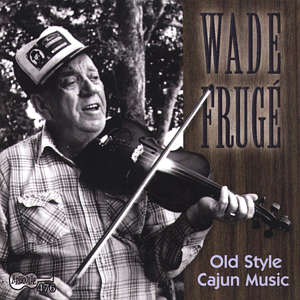
The first instrument widely used by Cajuns was the fiddle; from Acadian times it provided accompaniment for dancing at Bals de maison (house parties). It was common for one fiddler to play the melody while another provided rhythmic accompaniment (called bassing or seconding). The fiddle style of this time was relatively delicate and complex, using many old French melodies. It is best represented by the playing of Dennis McGee, who first recorded in 1929, and his contemporary Wade Frugé (who gave up for a long time because he claimed he couldn't keep the guys on the dancefloor off his girlfriend whilst he was playing!)
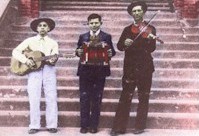
The supremacy of the fiddle was toppled in the 20's by the arrival of the diatonic accordion; though small and light this instrument is tremendously powerful and ideal for the heaving dancefloor in the days before amplification. This accordion was technically quite limiting; unable to play chromatic notes, many of the old tunes were abandoned or simplified. The fiddle style had developed largely around the key of D, to accommodate the use of open string drones; if playing with a D accordion this was fine, but with a C accordion the fiddler had to tune all his strings down a tone. Dennis McGee formed a highly influential partnership with the acclaimed black accordionist Amadée Ardoin; they played and recorded widely in the 20's and 30's. A typical band of the time would include accordion, one or two fiddles, guitar and triangle (a bistrbastringue) which means, appropriately, "to make a racket"), along with vocals.
From the mid 30's came several changes which were to bring the fiddle back to pre-eminence. The discovery of oil in Louisiana opened up the region to outside influences- largely from Texas, where Western Swing and Hillbilly music were in their Heyday. These fiddle-dominated styles were taken on board by many cajun bands, allowing greater commercial possibilities for many musicians. In addition, the innovation of amplification meant that the accordion lost its natural advantage. The accordion went out of fashion (cheers from the gallery!), replaced by steel guitar, bass and drums.
One of the first cajun string bands with this new, smoother sound was the Hackberry Ramblers, led by fiddler Luderin Darbonne. Although cajun by birth he honed his fiddle skills in Texas, and he was the first to bring amplifiers to the dancehalls.
Leo Soileau and his band the Three Aces brought a strong dose of Western Swing to cajun, as did Harry Choates, who earned himself the modest title "fiddle king of Cajun Swing".
The accordion enjoyed another revival after the war in the hands of the great Iry LeJeune; cajun war veterans returned home nostalgic for the distinctive sounds they remembered, and the new Americanised cajun styles faded. Tragically, Iry LeJeune was killed in a car accident in 1955, though his son Eddie, also an accordion player, keeps his memory very much alive.
With the arrival of rock and roll, cajun music as a whole had little chance of being heard much beyond Louisiana until 1964, when fiddler Dewey Balfa very reluctantly agreed to appear at the Newport Folk Festival. To his great surprise, he received not scorn but adulation from the huge audience, and he returned home convinced that cajun music was not something just for the old folks back home, but potentially had great international appeal.
Balfa Brothers
Along with his four brothers, Dewey Balfa became one of the pioneers of the great cajun revival, bringing music to audiences worldwide, a crusade continued by his daughter Christine Balfa of Balfa Toujours. Michael Doucet of Beausoleil brings a modern perspective to cajun music, while Ken Smith, an outstandingly clean and smooth fiddler, tours widely with DL Menard and Eddie LeJeune. The success of such musicians in reaching a wider audience is clearly demonstrated by the fact that Britain, for example, can now boast a whole army of home-grown cajun bands.
CREOLE AND ZYDECO MUSIC
The Creoles are the black and mixed-race French speakers of Louisiana- descendants either of “Free people of Colour” or former slaves from the time of French rule in the region. Their musical heritage is a mixture of African with the same French/American mix as the whites. Just as the Cajuns have a distinctive brand of the French language, so the creoles have their own patois. Poor creole and Cajun families lived in close proximity in Louisiana, and there must have been considerable cross-fertilization, as illustrated by the partnership between white fiddler Dennis McGee and creole accordionist Amadee Ardoin.
Creole fiddler Canray Fontenot (1922-95), who started out with a fiddle he constructed from a wooden cigar box, with strings of wire pulled from a screen door. His playing had a strong blues element, though it was one he had to use surreptitiously at Cajun dances; he explained to author Michael Tisserand “They didn’t want no blues because they would dance too close to one another, they didn’t want that at all. You was out of business if you played blues. So we started to slip up on them with something like the “Prison Bars” where you could blues it or you could waltz it”. He worked with his father, mother and grandfather, and a neighbour, Douglas Bellard, The first creole fiddler to appear on record.With the development of amplification in the 30’s and 40’s, creole music evolved into Zydeco. This differs from Cajun music in several respects. The band is usually led by piano accordion (as opposed to the smaller cajun button accordion). Fiddles are rare, and the triangle almost non-existent, but drums, bass, electric guitars and sax are common. A distinctive instrument in many zydeco bands is the frattoir or corrugated tin washboard. The music tends to be a lot louder, with more blues, rock and funk influence. The beats tend to be fast and insistent- the waltzes, so common among cajun are rare. Among the leading artists are Queen Ida, Clifton Chenier, Buckwheat Zydeco, Rockin’ Dopsie and Boozoo Chavis.
Cajun fiddle technique
Cajun fiddle style evolved with the necessity to be as loud as possible, so the use of double stops is paramount. Wherever possible open-string drones are used, and simple double-stops are frequent. The bowing is strongly accented, with separate bows sawing out most of the beats. Trills are used, and slides can go both up to and down from a note. A trademark ornament of cajun fiddling is a little one-string run up to a third or fourth-finger note, combined with the lower string drone. As mentioned before, older players often tune the whole instrument down a tone if accompanying a C accordion ; some also use alternative tunings such as GDGB (tuning down the E and A strings), increasing the effect and availability of drone notes. Where twin fiddles are used, the second fiddle may either do a shuffle backing, play the melody an octave down, or play harmony.
Cajun fiddle repertoire
The Cajun repertoire is made up of lively 2-steps (sometimes called Specials) and waltzes; at a dance these will strictly alternate throughout the night. Essential for any cajun band is the waltz Jolie Blonde, first recorded by Amadée Breux in 1929, but covered by just about everybody since. Another fine waltz is La Valse du Pont D'Amour (Lovebridge Waltz) from Iry LeJeune.
Typically the words to these songs can be attributed to particular singers, whilst the tunes, which are usually very simple, may go back centuries. Lafayette, a 2-step, was the first cajun song ever recorded, by Joseph and Cleoma Falcon in 1928. Lacassin Special is another from Iry Lejeune, while two of the most famous songs of all are The Back Door by DL Menard and the cajun-country hit for Hank Williams, Jambalaya.
"Cajun Music is bound by an ancient spirit. Somewhere between interlocked fiddle lines and accordion embellishments, in the spaces of silence between the notes, between the ringing tome of the ‘tit fer, the triangle, there is a soulful space where musicians and listeners visit one another. This space and the dancers and musical instruments that move around it, holds the emotional legacy of the Cajun culture".
-Todd Mouton (a freelance writer based in Lafayette, LA.)
Links:
Return to fiddlingaround.co.uk homepage
Chris Haigh is a freelance fiddle player based in London. He plays bluegrass, country, old time and Western Swing fiddle styles, and works with the barn-dance band Quicksilver,
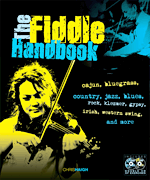
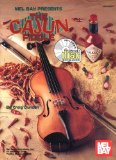

Fiddler Craig Duncan presents here 64 classic cajun songs and tunes, including essentials such as Diggy Liggy Lo, Jolie Blon, Lacassinne Special and Grand Texas (used by Hank Williams in his song Jambalaya). The first eight numbers in the collection are given very simple arrangements, and the level of complexity increases through the book, giving you eventually a detailed grasp of the double stops, drones slides and grace notes which mark authentic cajun fiddling. Many of the tunes go round two or three times, with different variation on each. The notes with each tune give reference to the fiddlers who recorded and popularised them. There is an accompanying cd with all the tunes recorded by Duncan with guitar accompaniment.

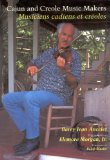
Cajun and Creole Music Makers: Musiciens cadiens et créoles
This is a beautiful book which with photos (many full-page), interviews, and background, gives the stories of many of the leading legendary and contemporary players in Cajun and Zydeco music. They include fiddlers Dewey Balfa, Michael Doucet, Dennis McGee and Canray Fontenot. The text is in both English and French, and is soaked with the atmosphere of Louisiana. This would make a great present for anyone interested in this kind of music.