MENU TO FIDDLE STYLES:
............................
Old Time Fiddle
THIS PAGE HAS MOVED. PLEASE GO HERE TO READ ABOUT OLD TIME FIDDLE . PLEAS
THIS PAGE HAS MOVED. PLEASE GO HERE TO READ ABOUT OLD TIME FIDDLE
Return to fiddlingaround.co.uk homepage
Chris Haigh is a freelance fiddle player based in London. He plays bluegrass, country, old time and Western Swing fiddle styles, and works with the barn-dance band Quicksilver, He is the author of The Fiddle Handbook


Mel Bay presents Ozarks Fiddle Music
The Ozarks- a hilly rural backwater including northern Arkansas and Southern Missouri, is one of the heartlands of “old time” American fiddling, with an unbroken tradition going back centuries. In this remarkable book, ethnomusicologist Drew Beisswenger and tune collector Gordon McCann catalogue the music and performers of the region in loving and exquisite detail.
The book opens with the rich and colourful background to the local fiddle tradition- centred on contests and house dances (where there was often a fair measure of “drinkin’, swearin’ and shootin’”). A total of 308 tunes are included, and there is not only detailed description and background to each one, but also a good deal of overall comparison and analysis. We learn for example, that of the tunes studied 14.9% have crooked measures, 28.8% use a “shave and a haircut” outro, while 14% have a “potatoes” intro. Based on this mass of information, the authors are able to summarise the regional style; “When compared to most Appalachian fiddlers, the Ozark fiddlers prefer to play a fairly clean, crisp, and fast melody line with more single note bowing and fewer complex bowing patterns and licks. Tunes tend to be more “squared up”…In the Ozarks it appears that traditional fiddlers have tended to focus more on fast, driving square dance fiddling….Fiddlers are also more likely to play rags, blues, waltzes, or sentimental popular songs”
The tune collection is arranged around the fiddlers -80 in all, who were chosen to represent “senior fiddlers who were raised in Ozarks communities that have maintained fiddle traditions for many generations”. Each fiddler has one or a group of tunes typical of their repertoire. The fiddlers, both contemporary and historical, each receive a brief but often fascinating biography. Howe Teague (1913-2005), for example, when he was seven or eight “traded a pig for a fiddle”, while from the age of 22 Howard Smith (1911-2000) fiddled without his left arm, having lost it in a shooting accident. Not surprisingly, the 308 tunes are accurate and detailed transcriptions from the original, with everything you need to know about tempo, phrasing, double stops, tuning, variations and so on. The enclosed CD has 37 original “field” recordings.
For the experienced fiddler with a strong interest in old time fiddling, this book is an absolute treasure. It is described as “the first comprehensive volume devoted exclusively to traditional Ozark fiddling”. You certainly won’t need another one.
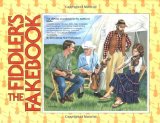

This collection is described as "the ultimate sourcebook for the traditional fiddler". Certainly if you're interested in old time and bluegrass fiddling this is the book for you, though there is also a fair selection of Irish, Scottish, Shetland and French Canadian tunes.
The spiral binding makes it easy and practical to use, as does the relatively large music font. Unlike a book like O'Neills, there are chord symbols, and the author David Brody has taken the trouble to give you the key; since many of these tunes are modal (eg A Dorian, E Aeolian), this is very helpful. Also valuable is that each tune is listed by genre (old-time, Irish etc), by type (reel, hornpipe), and by tuning where appropriate (eg AEAE). For every tune there is also a list of recordings, and the alphabetic arrangement makes it easy to find a tune if you know what you're looking for. There is a short section at the beginning introducing and explaining these different classifications.
Many of the tunes are well known standards, but there also some rarer gems, such as one or two David Grisman "Dawg" tunes and some excellent contest-style numbers.

Marion Thede is a classical violinist who, while teaching in Oklahoma in 1928, was unexpectedly converted to Old Time fiddle playing. She found the experience baffling but, ultimately, highly rewarding, and went on not only to become a professional fiddler, but also to assemble this fine collection of Old Time tunes. She quickly recognised the importance of open tunings to the old time fiddler. In her words: “As I recognized that it is the unusual tuning of the fiddle strings that gives certain selections their ancient tone colour, I devised a method of capturing it on paper.” In her book she uses the unusual, but very useful method of presenting many of the tunes twice; first as fingered ( ie as if the fiddle were not retuned), and then as sounded; ie what you would actually hear. Over 150 tunes are carefully transcribed with bowings, tempos, double stops and ornamentation and, where appropriate, words for singing. She names all her sources, and provides colourful snippets of background information about many of the tunes. The book is worth reading just for some of the titles; among my favourites are “Gotta quit kickin’ my dog around”, “Benny eat a woodchuck”, “Custer’s last charge”, “Granny will your dog bite?”, “Possum Pie” and “Wolves a howlin’” Her style is folksy, engaging, self deprecating and full of charm. You’ll love this book.
Mel Bay's Complete Country Fiddler

Bluegrass, old time and western swing fiddling are all “folk” styles, over the years they’ve been closely studied and pretty well covered when it comes to tutor books and videos. Country fiddle on the other hand, though related to all of them, has been rather left to fend for itself, despised perhaps for the fact that you can actually make some money by playing it. Stacey Phillips has addressed this problem with the Complete Country Fiddler.
He starts off with describing the straightforward use of simple fiddle licks, and their relationship to a chord sequence. He shows how the use of varied rhythms and intervals can spice them up no end. He deals with blues scales. and hemiolas- repeating 3 note patterns which will cut across the beat,. One of the crucial techniques in Country fiddle is use of double stops, and he shows how you can use these through a chord sequence. Bowing patterns such as the Nashville Shuffle, Georgia Bow and Double shuffle are all covered. He then moves on to different sub-genres within country fiddle; Blues, Honky Tonk, bluegrass, “commercial country” and country swing,
He refers specifically to the playing of many of the greats; Dale Potter, Johnny Gimble, Mark O’Connor , Vassar Clements, Chubby Wise and Tommy Jackson; and includes interviews with many of them. The most useful feature of this, as with most of Phillips’ books, is the way he deals mostly with short, bite sized bars and phrases, keeping up a constant commentary on how to play them and what to do with them. Whilst there are some complete pieces, there are not enough to be overwhelming. His style is, as ever, full of dry humour, with comments such as “No pussyfooting around with the fingering. If you’re going to make a mistake, make it a loud one.” Altogether a highly entertaining, practical and useful book.

American Old Time Fiddle Tunes: 98 Traditional Pieces for Violin (Schott World Music Series)
The book opens with a brief cultural history of old time fiddling, from its roots in the tunes of British and Irish settlers, to the long years of isolation in the backwoods of Appalachia, and the introduction of African-American rhythmic and blues influences. The importance of cross tunings is introduced, and Pete explains how in sessions, players will stick with a single key and tuning for as long as it takes to run out of tunes, before changing
Bowings, shuffles and internal rhythms are discussed, along with a few words about regional stylistic variations, and sources of field recordings. Pete has a knack of capturing the essence of fiddle styles in a thoroughly engaging and authoritative way. Describing the difference between old time and bluegrass, he comments; while bluegrass with its white gospel harmonies, melodic style banjo and smart dress code speeds along the rails like a freight train, old time rattles and bumps along like a horse and buggy down a dirt track. My one criticism of the book is that we don’t get more of these gems, as the introduction is all too short.
There are 98 tunes, grouped by key and tuning. The first few are played slowly and deliberately to introduce various aspects of bowing, and in the standard tuning section are numbers which will be familiar to most readers- Eighth of January, Blackberry Blossom, Cumberland Gap, Cotton eyed Joe and so on. For me the real gems come later on, particularly in the cross tuning sections. Among my favourites are the syncopated Pike’s Peak, Jack o’ Diamonds (the only AEAC# tune, complete with pizzicato and hog calling!), the wonderfully eccentric The Ways of the World, the bluesy Sweet Sunny South, and the darkly modal Cluck Old Hen. Shove the pig’s foot a little further in the fire is worth playing for the title alone. A wonderfully rich and diverse collection.
Old-Time Fiddle Style Book/CD Set - A Collection of 35 Traditional Appalachian Tunes

This is a collection of 35 old time fiddle tunes presented in a way to easily enable learning both of the melodies themselves and the appropriate bowing and ornamentation. Each tune is recorded three times on the accompanying CD; once played slow and unadorned, a second time at medium tempo, with more and ornamentation, and a third time up to speed, and with occasional variations.
Kolodner sensibly decided not to write in the drones and double stops; they are essential to eventually getting the authentic old time sound, but are a hindrance to reading and learning tunes for an inexperienced player. Instead there are helpful notes with each tune, suggesting what type of ornamentation might be appropriate. There is a valuable and detailed section on bowing patterns- another essential for achieving the feel of old time fiddling. He covers different versions of the Nashville and Georgia shuffles, looks at string crossing patterns, ghost bowing (two consecutive upbows separated by a sort of “gulp”), and anticipation (starting a note or phrase before the barline).
There is a fairly substantial section on left hand ornamentation (hammer-ons, fourth finger unison etc). This is valuable stuff, but because there are no accompanying musical illustration here, I suspect many readers will be tempted to skip this section. Kolodner then deals with cross tuning, for which he comments “sight reading can be a challenge”. Most writers present cross-tuned melodies so that they are played “as read”, ie with no need for transposition when a string has been retuned. I think that his decision not to follow this convention is questionable. His “tools of the trade” section has interesting and thoughtful discussions of modes, tune structures, chord progressions, and “anchors” within tune.
It is a fine collection of tunes, well played on the recording, with examples of different tunings and bowing patterns; some well known and straightforward (Shady Grove, Liza Jane), some crooked tunes (Chinquapin Hunting, Elk River Blues), and one original (Journey to the Heartland).
This is a book aimed at intermediate level players who want to learn some of the repertoire and style of American contest fiddling. That this more or less equates to Texas fiddling is obvious to those already on the contest circuit, but to outsiders this is by no means clear, so perhaps a paragraph or two on the background to contest and Texas fiddling would have been valuable.
The 51 tunes, largely drawn from the repertoire of five-times national fiddle champion Herman Johnson, are arranged roughly in order of increasing difficulty. Amongst the technical challenges gradually introduced are swing rhythm, double stops, slides, second and third positions, harmonics, double stop slides, triplet runs and flat keys. In typical Texas style each tune has several variations, giving sufficient length and variety for contest performance.
The chords are mostly written in basic form but some tunes, Tom and Jerry for example, have the full walking guitar chord sequence which is such a powerful feature of Texas style. In the introduction the tunes are helpfully separated into hoedown, waltz, and the mysterious “tune of choice”; in most contests you will be asked to play one from each category. There are many standards here well known to fiddlers the world over- Blackberry Blossom, Fisher’s Hornpipe and Beaumont Rag for example, plus quite a few I’d not come across before, such as Georgina Moon, Choctaw and Redbird Hornpipe. However, it’s not the tunes themselves but the tried and tested arrangements and variations which make this a satisfying and valuable book.